Most review requests get ignored because they arrive at the wrong moment and ask for a favor with nothing in it for the customer. A workflow that gives the customer something enjoyable first, checks in privately on how it went, and only then invites the happy ones to post publicly gets more reviews, without the public page filling up with complaints from people who were never going to leave five stars anyway.
Why most review requests get ignored
A text or email that shows up a day after a visit, asking for three minutes of someone's time to write a review, competes with everything else in their inbox. It arrives disconnected from the experience it is asking about, it asks the same thing of every customer regardless of how their visit actually went, and it offers nothing back for the time it takes.
The response rate reflects that. Most of these requests are deleted unread, and the customers who do respond are disproportionately the ones with a complaint, because a bad experience is the one thing people remember to act on unprompted. The result is a review page that undersells a business that most customers were actually happy with.
A different shape: give something first, then ask
The order matters more than the wording. Instead of asking for a review and offering nothing, give the customer something enjoyable first, then make the review conversation feel like a continuation of that, not a separate transaction.
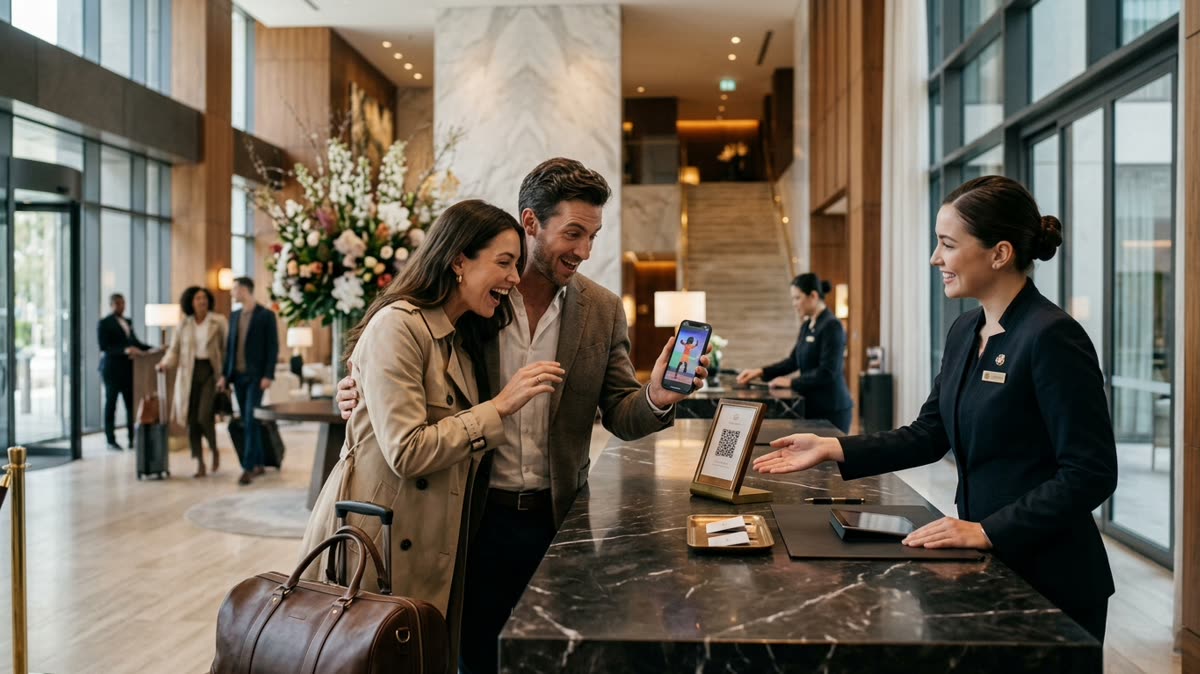
In practice, for SnapDance Stations, that looks like: a customer scans a QR code and gets a free, personalized AI dance video, sponsored by the business. A minute after they have watched it, a quick private message asks how their visit went, on a simple scale. A customer having a bad day gets a channel straight to the business to say so, privately, which is a chance to fix something before it ever becomes public. A customer who had a great time gets invited to post that experience on the business's chosen platform, whether that's Google, Yelp, Facebook or TripAdvisor, and a screenshot of the posted review earns them a second free video as a thank-you.
Checking in privately before asking publicly is standard practice across review-management software, not a trick unique to this. The part worth getting right is what the reward is actually for: posting a review at all, not the star rating itself. That distinction is what keeps the mechanism honest rather than turning into a review-buying scheme.

How the common approaches compare
| Approach | What it costs the business | Why the customer responds, or doesn't |
|---|---|---|
| A manual email or text after checkout | Staff time only | Feels like an obligation with nothing in it for them; easiest to ignore |
| Automated review-request software | A recurring subscription fee | More consistent than manual outreach, but still a flat ask with no incentive attached |
| A generic reward-for-any-review app | Reward cost, plus platform-policy risk if the reward is tied to the rating itself | Works, but only as well as the reward is worth to that customer |
| SnapDance Stations | Rides inside the existing sponsorship subscription; the reward is a second free video, not new spend | The customer already has something they want, a personalized video, so the review ask feels like part of a good experience rather than a separate favor |
Why it matters more for some businesses than others
For a hotel, this is not a marginal improvement. Star rating drives ranking on every major booking site, so a tenth-of-a-point difference in average rating can move a property up or down the search results that decide whether it gets booked at all. Catching a guest at a genuinely good moment, rather than hoping a generic post-stay survey lands at the right time, compounds over a year of stays.
The same mechanics apply to any business with repeat foot traffic and an interest in its public rating: salons, restaurants, dental and chiropractic clinics, gyms, and any retail location with regular visitors. A SnapDance Station is a printed set of QR codes at the location; the business dashboard handles the rest, including which review platform each location points to and a report of what came in.
Want to see what a Station looks like at your location?
Set up takes a printed poster and a few minutes in the dashboard. See how SnapDance Stations works end to end.
Explore SnapDance StationsSetting it up without annoying anyone
A few things keep this from feeling like a transaction instead of a thank-you:
- Lead with something the customer actually wants. A free personalized video is the hook; the review conversation comes after, not instead of it.
- Check in privately before asking publicly. A bad experience should reach the business directly, not a public review page, and a good one should be invited to share, not pressured to.
- Reward the action, not the rating. The thank-you is for taking the time to post, never conditioned on what the review says.
- Point each location at the platform that actually matters to it, whether that's Google for a local search ranking or TripAdvisor for a hotel's booking-site visibility.
Frequently asked questions
How can I get more five-star reviews without annoying customers?
Give the customer a reason to engage before you ask for anything. A quick private check-in on how it went, sent right after something they actually enjoyed, reads as a continuation of a good experience rather than a cold request for a favor.
Is it okay to only ask happy customers for a review?
Checking in privately first and routing unhappy feedback straight to the business, rather than a public page, is standard practice across review-management software. The part to get right is never conditioning the reward on the star rating itself, only on the customer taking the time to share feedback at all.
How can a hotel get more five-star reviews?
A hotel's star rating drives its ranking on every booking site, so the stakes are higher than a typical local business. Catching guests at a genuinely good moment, such as checkout or a planned activity, and making the review ask feel like a thank-you rather than a chore, consistently outperforms a generic post-stay email.
Can restaurants, salons, and dental or chiropractic clinics use this too?
Yes. The mechanics are the same for any business with repeat foot traffic: give the customer something first, check in privately, then invite the happy ones to share where it counts.
Do I need special hardware or an app to collect reviews this way?
No. A printed QR code at the location is the only physical setup, and the business manages everything else from a web dashboard. The customer never installs anything.